Four days. Four conversations. One broader question: how can fashion and lifestyle use their cultural and economic influence to help shape a more sustainable future?
Throughout September, the United Nations Fashion and Lifestyle Network convened its 2026 Annual Meeting | Fashion Week Series at United Nations Headquarters in New York.
Taking place on September 10, 14, 16 and 17 alongside New York Fashion Week, the program brought together voices from fashion, academia, media, materials, culture, sport, technology and international organizations.
Rather than focusing only on what fashion puts on the runway, the series looked at the systems surrounding it: how products are made, how future talent is educated, how materials evolve, and how culture and lifestyle can influence behavior at scale.
For Fashinnovation, the Fashion Week Series continued a relationship that began before the first session.
On August 27, Fashinnovation supported the Network’s Media Preview at the Goals Lounge at United Nations Headquarters, where members, media and partners received an early look at the Annual Meeting and the initiatives shaping the Network’s work. Fashinnovation has supported the UN Fashion and Lifestyle Network as a Strategic Partner, connecting its conversations with the broader fashion, business and innovation ecosystem.
Made to Matter: Portugal
The series opened on September 10 with Made to Matter: Portugal, examining how Portugal has developed a globally competitive fashion and footwear ecosystem around craftsmanship, innovation and collaboration.
The event brought together The National Association of the Clothing, Garment Manufacturing and Fashion Industries (ANIVEC), Fashion Catalyst, BÉHEN, Armando Cabral, Business of Fashion and more!
The discussion looked beyond manufacturing capacity alone. It explored how local value chains, creative leadership, material innovation, quality and longevity can work together as part of a more responsible model for fashion production.
Portugal provided a useful starting point for the series because sustainability was framed not simply as a new technology or material, but as something connected to industrial knowledge, place and long-term capability.
The larger question was clear: what does competitiveness look like when quality, resilience and responsibility become part of the same equation?
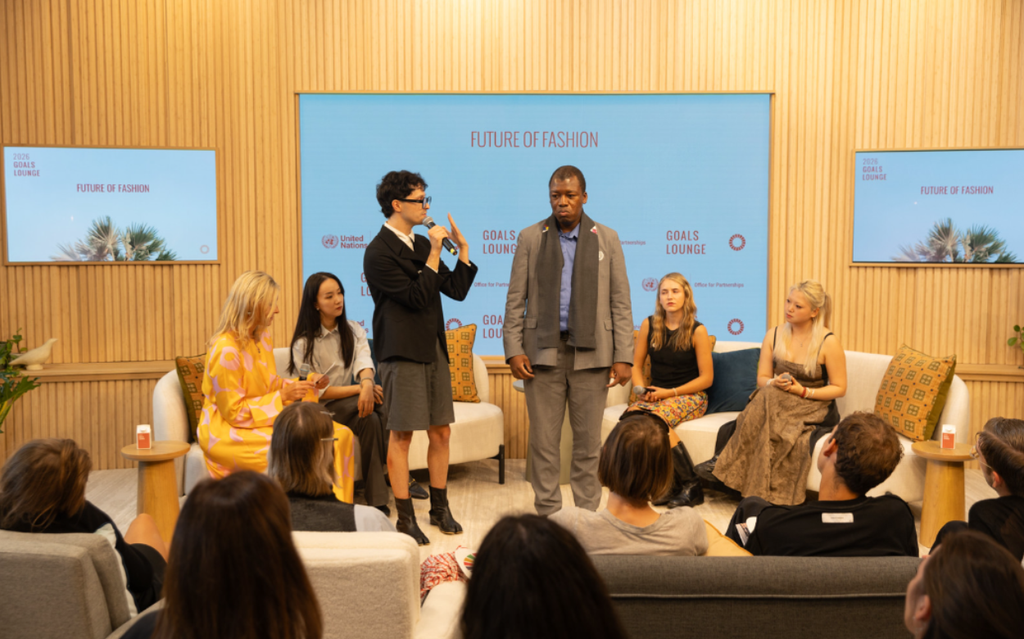
Future of Fashion: Education Meets Industry
On September 14, the conversation shifted toward the people who will shape the industry next.
Future of Fashion brought together representatives from institutions and organizations including Polimoda, Central Saint Martins, the Swedish School of Textiles, Parsons School of Design and the Fashion Institute of Technology.
The session explored creativity, responsible innovation and the changing role of fashion education as the industry faces new technological, environmental and cultural realities.
A tangible example of that collaboration came through the second phase of the UN Tour Guide Uniform Initiative.
Students from Central Saint Martins and the Swedish School of Textiles collaborated on new accessories for the initiative, demonstrating how education can move beyond theory and into real-world cross-institutional design challenges.
The conversation reinforced an important point: preparing fashion for what comes next is not only about teaching new tools.
It is also about teaching future designers and leaders to work across disciplines, institutions, cultures and systems.
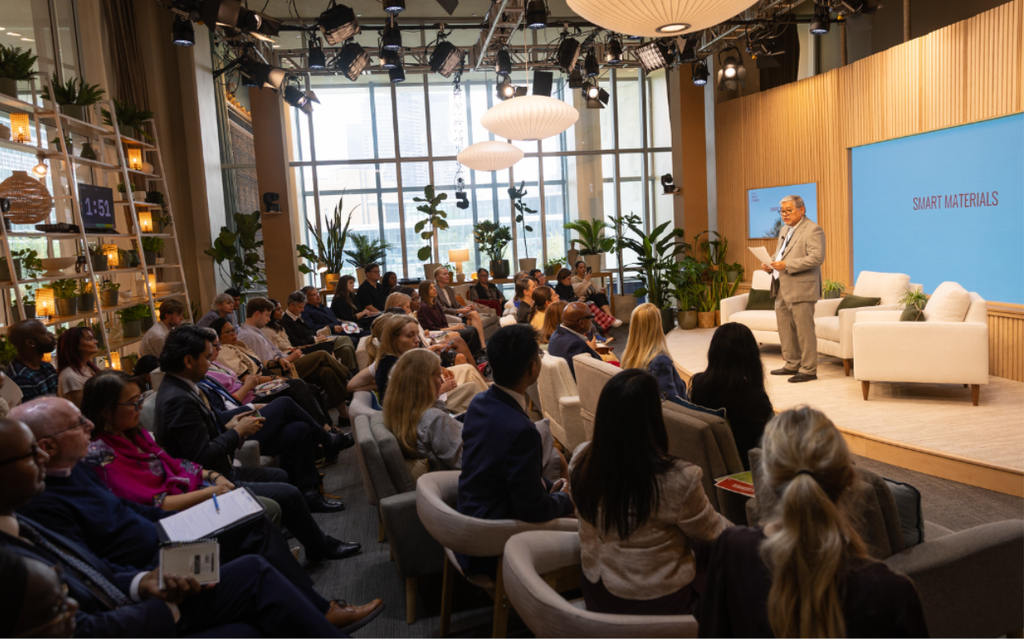
Smart Materials: Rethinking What Fashion Is Made Of
On September 16, Smart Materials moved the discussion directly into one of fashion’s most consequential challenges: materials.
The session brought together perspectives from organizations including Pandora, OEKO-TEX, the Philippine Textile Research Institute, the International Labour Organization, Ax-Foundation and Instituto E.
The conversation connected scientific research and material innovation with heritage and craftsmanship.
Examples ranged from wool in Sweden to pineapple fibers in the Philippines, demonstrating that the future of materials may come not only from entirely new inventions, but also from reexamining local knowledge, biological resources and production traditions through a contemporary lens.
Importantly, the session also connected environmental progress with people.
A more circular or resilient materials system cannot be separated from the communities and workers involved in producing it. The transition toward more responsible fashion therefore has to consider both what fashion is made from and how value is distributed across the system.
The Ripple Effect: When Lifestyle Becomes a Platform for Impact
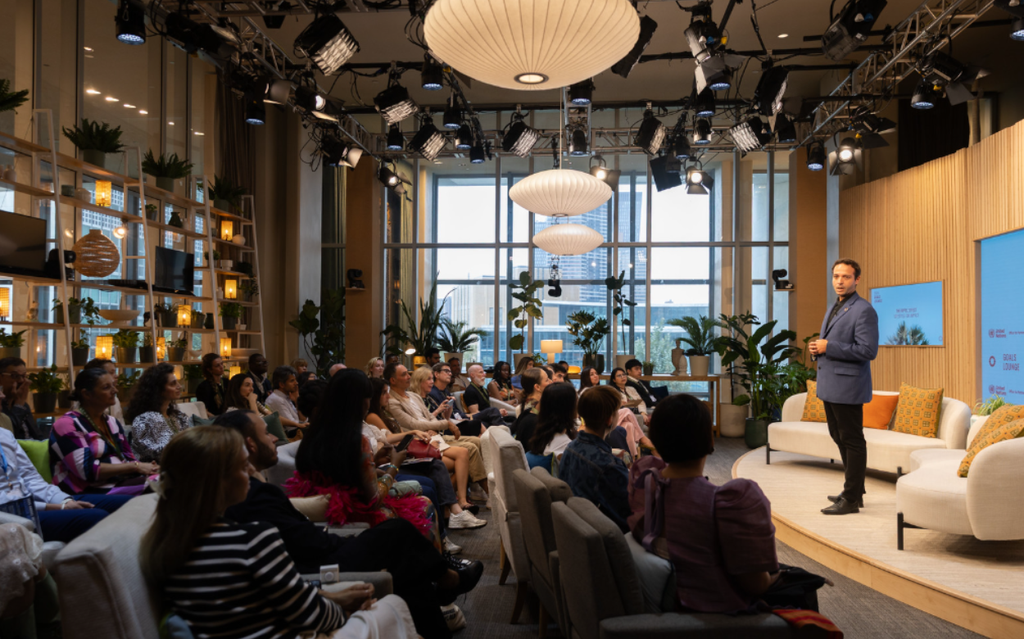
The series concluded on September 17 with The Ripple Effect: Lifestyle for Impact.
This time, the room extended well beyond fashion.
The program brought perspectives from TIME, Lagos Fashion Week, Rio Carnaval, New York Road Runners, WBGO, Web Summit and others to examine how fashion, culture, sport, media and large-scale experiences can influence behaviors and bring new ideas into the mainstream.
The premise was particularly relevant because sustainability does not live only inside supply chains or corporate strategies.
It also lives in culture.
The events people attend, the stories they consume, the clothes they wear, the communities they belong to and the experiences that shape them all influence how ideas spread.
That makes lifestyle an important part of the sustainability conversation — not as a separate industry, but as a collection of cultural forces capable of shaping attitudes and action.
Fashinnovation founder Marcelo Guimarães participated in the session with closing remarks, joining a program that reflected just how wide that ecosystem has become.
Fashion, culture, sport and innovation do not often occupy the same room.
Here, they did.
Beyond Fashion Week
There was a common thread running through all four sessions.
Made to Matter looked at the systems that make products possible.
Future of Fashion looked at the people being prepared to shape the industry next.
Smart Materials examined what products can be made from and how those systems can become more resilient.
And Lifestyle for Impact expanded the conversation into the cultural spaces that influence how people live, consume and think.
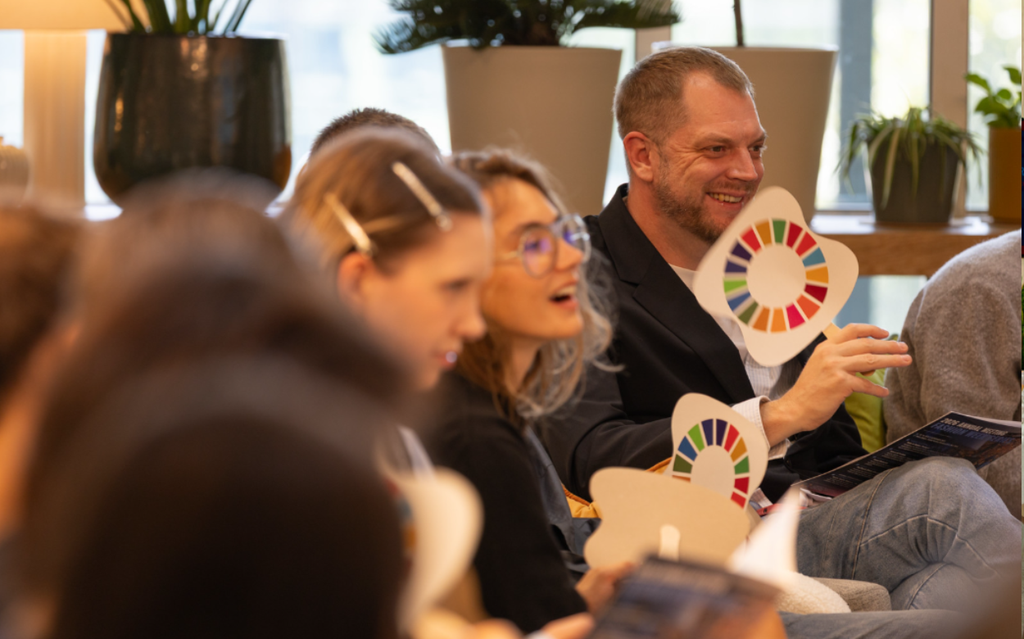
Together, they offered a broader definition of fashion innovation.
Innovation is not only a new technology.
It can be a new material, a new educational model, a different relationship between industry and culture, or a new way for organizations that would rarely meet to work together.
That is also why moments like New York Fashion Week matter beyond the runway.
Fashion Week concentrates attention. The opportunity is what the industry chooses to do with that attention.
“Fashion Week creates an extraordinary concentration of attention around the industry. The opportunity is to use that moment not only to talk about what is being shown on the runway, but also about the systems, people and ideas shaping what comes next.”
— Marcelo Guimarães, Founder of Fashinnovation and Advisory Group Member of the UN Fashion and Lifestyle Network
From Preview to Participation
When Fashinnovation joined the Network’s Media Preview in August, the Fashion Week Series was still ahead.
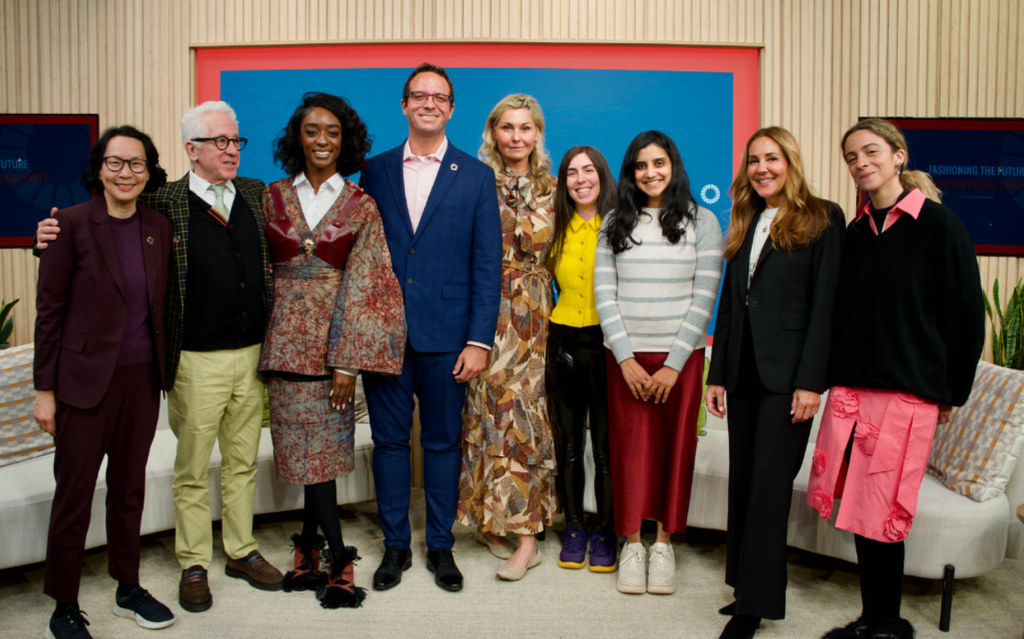
A few weeks later, those conversations became four days of programming at United Nations Headquarters.
The formats and subject matter changed from session to session, but the underlying idea remained remarkably consistent:
Connect. Collaborate. Showcase. Advance.
Those four words are also how the UN Fashion and Lifestyle Network describes the framework behind its work. The Network brings together stakeholders across fashion and lifestyle to support collaboration and action toward the Sustainable Development Goals.
For Fashinnovation, the experience also reinforced something we have believed since the beginning:
The future of fashion is rarely built by one industry, one company or one conversation.
It is built when the right people, perspectives and opportunities intersect.
And sometimes, that starts simply by getting them into the same room.