Fashion Week ends when the last model walks. Building the brand doesn’t.
What happens when creative vision meets artificial intelligence, customer experience and commerce?
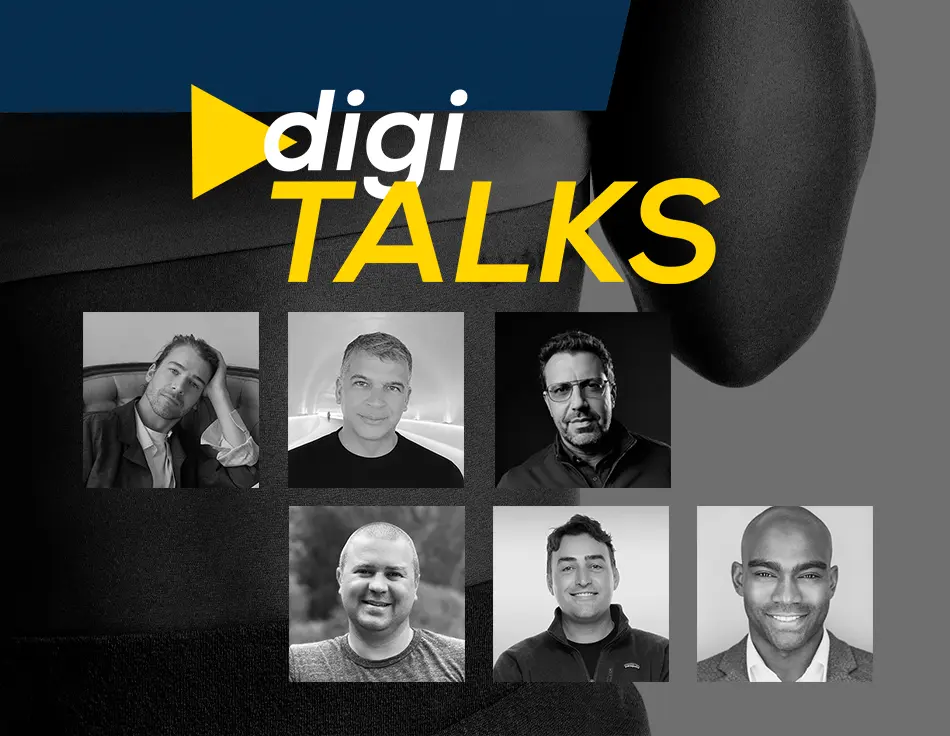
That question was at the center of Fashinnovation’s latest DigiTALKS, “After the Runway: From Fashion Week to the Future of Brand, Customer Experience & Commerce,” held on October 9.
As AI in fashion e-commerce continues to evolve, brands are facing a new challenge: how can technology improve the shopping experience without losing the identity that makes a brand unique?
The conversation brought together creative leaders, brand operators and commerce innovators to explore what happens after the runway — when attention must translate into relationships, customer experiences and long-term business growth.
Joining the conversation:
- Sander Lak — Founder & Creative Director, Sanderlak
- Carlos Fernando Belmonte — Head of Product Operations, Sanderlak
- Blake Norman — CEO, PLAE
- Ryth Martin — Founder & CEO, Skipify
- Nima Sepasy — SVP, Agent Suite, Mastercard
Moderated by Aaron Cunningham, SVP Commerce, Daily Mail US.
AI Should Understand the Brand, Not Just the Product
One of the central themes of the discussion was the importance of making AI-powered shopping experiences feel consistent with a brand’s identity.
A generic AI assistant can answer questions.
But a brand-trained assistant has the potential to do much more.
It can understand how a brand communicates, how its customers shop and what kind of experience those customers expect.
During the conversation, Sander Lak and Carlos Belmonte discussed their work with Skipify to develop an AI-powered shopping experience aligned with Sanderlak’s premium positioning.
The objective goes beyond providing product information.
It’s about creating an experience that feels like an extension of the brand itself.
Just as a knowledgeable salesperson understands the product, the customer and the brand’s personality, AI needs the right information and guidance to deliver a relevant experience.
And that process doesn’t end when the technology goes live.
Continuous learning, testing and refinement help brands understand customer interactions and improve the experience over time.
From Searching for Products to Asking for Recommendations
Traditional e-commerce has largely been built around search bars, product categories and filters.
Customers navigate websites, compare products and make purchasing decisions.
AI introduces a different possibility.
Instead of searching through multiple pages, customers can describe what they’re looking for and receive recommendations based on their needs.
The conversation explored how AI-powered commerce can support more personalized shopping experiences, including:
- Finding similar products in different sizes or colors.
- Recommending complementary pieces to complete a look.
- Helping customers discover products based on their preferences.
- Making the journey from product discovery to checkout more intuitive.
For fashion brands, the opportunity isn’t simply to automate the shopping process.
It’s to bring more of the personalized service associated with physical retail into digital commerce.
Technology can help customers discover products they might otherwise overlook, while reducing friction throughout the shopping journey.
AI in Fashion E-Commerce: Brands Have a New Audience
Another important perspective came from Nima Sepasy of Mastercard.
As AI-powered discovery and agentic commerce develop, brands increasingly need to consider how their products are understood not only by people, but also by AI systems.
Traditionally, e-commerce websites have been designed primarily for human visitors.
Visual merchandising, product photography, storytelling and navigation all help customers understand what a brand offers.
But AI systems also depend on accessible, structured and accurate product information.
That creates new considerations for fashion businesses.
How easily can an AI assistant understand what a product is, who it’s for and why it might be relevant to a customer?
Product descriptions, structured data and website architecture can all influence how effectively AI systems interpret and recommend products.
A visually compelling website remains essential.
But in an increasingly AI-assisted shopping environment, brands also need to think about how their digital information can be interpreted by technology.
The next evolution of e-commerce may require brands to design for two audiences: people and the AI systems helping them shop.
Technology Should Strengthen the Human Experience
Across the discussion, a recurring question emerged:
How can brands use increasingly sophisticated technology without making the customer experience feel less personal?
For fashion, this question is particularly important.
Fashion isn’t simply transactional.
It involves identity, emotion, aspiration, creativity and personal expression.
Technology can help customers navigate products, discover relevant recommendations and complete purchases more efficiently.
But those capabilities should support the brand experience rather than replace it.
The opportunity is to combine the efficiency of AI with the qualities that make a brand distinctive.
Better technology shouldn’t mean less personality.
It should create more opportunities for brands to understand and serve their customers.
After the Runway, the Real Work Continues
Fashion Week creates visibility.
But building a successful fashion business requires much more than attention.
It requires a clear creative identity, strong operations, customer relationships and the ability to adapt as technology and consumer behavior evolve.
That’s what made this DigiTALKS conversation particularly relevant.
From Sanderlak’s creative and operational perspective to PLAE’s customer experience, Skipify’s approach to agentic commerce and Mastercard’s work in AI, the discussion connected different parts of the same business challenge.
How do brands turn creative vision into lasting commercial relationships?
AI is becoming part of that equation.
But the technology itself isn’t the strategy.
The strategy is understanding the customer, protecting the brand’s identity and building experiences that connect the two.
Watch the Full Conversation
FASHINNOVATION DigiTALKS — After the Runway
From Fashion Week to the Future of Brand, Customer Experience & Commerce
Watch the full conversation:
Watch DigiTALKS: After the Runway
This DigiTALKS is part of Fashinnovation’s ongoing series connecting the people building the future of fashion, retail and technology.
The runway gets the attention. What happens next builds the business.