Building a brand across markets has traditionally involved familiar questions: Where do we expand? Which partners do we work with? How do we get the product in front of more customers?
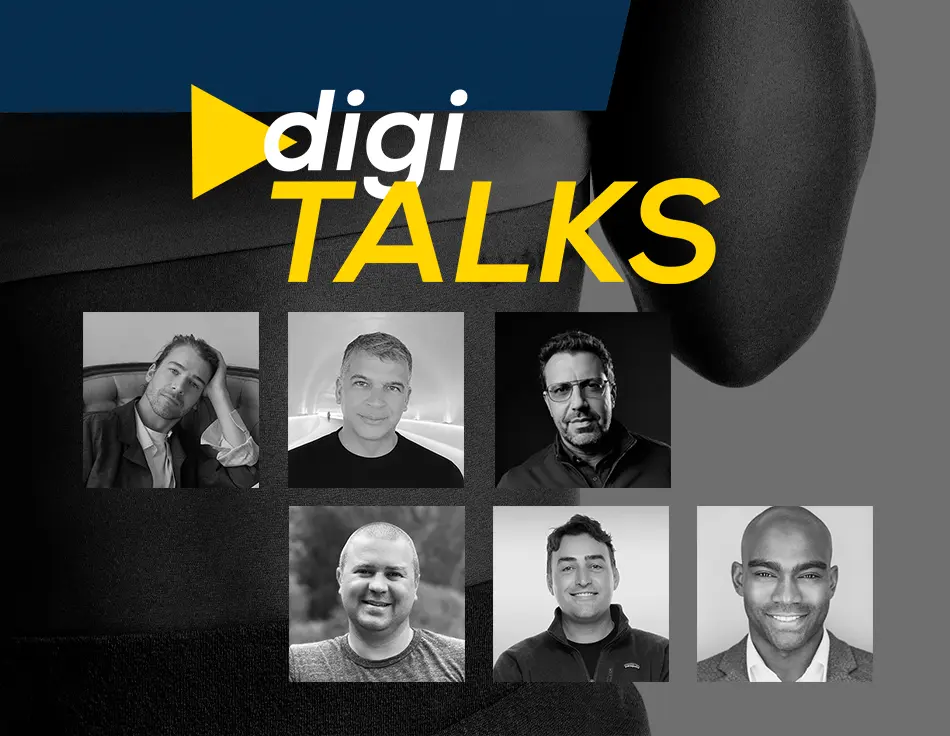
But at the latest edition of Fashinnovation DigiTalks, held on September 3, the conversation went deeper.
As technology transforms how brands create, communicate and scale, what actually makes a fashion brand valuable? And in a world where visibility is increasingly easy to generate, how do brands create something much harder to manufacture: desire?
The conversation brought together Eva Platini-Hernandez, VP of Business Development at WHP Global; Giovanni Lo Faro, CEO International at MODO Eyewear; Marie Driscoll, President of the Retail Marketing Society and CEO of Driscoll Advisors; and Weber Wong, Founder & CEO of FLORA.
Brands Are Assets, Not Just Operations
Eva Platini-Hernandez brought forward an important shift in how the industry thinks about brands: the distinction between the brand itself and the operations behind it.
A powerful brand can become an asset in its own right — one capable of extending across categories, markets, partnerships and business models.
That changes the conversation around growth.
Expansion isn’t simply about selling more products in more places. It’s about understanding what part of the brand is truly valuable — and protecting that value as the business grows.
When Anyone Can Generate a Beautiful Image, Desire Becomes the Moat
One of the most interesting ideas to emerge from the conversation was the relationship between technology and desire.
Generative tools are making high-quality creative output faster and more accessible. Beautiful imagery alone is becoming easier to produce.
But technology cannot automatically manufacture brand desire.
Recognition is not the same as relevance. Reach is not the same as loyalty. And being known is certainly not the same as being loved.
For fashion brands, that distinction may become increasingly important as the tools available to everyone become more powerful.
More Than a Product
Giovanni Lo Faro brought the conversation back to the product itself.
Technology can enhance a product, but it cannot replace the fundamentals that make consumers want to wear it.
Wearables and smart glasses offer a clear example. For technology-driven fashion products to become part of people’s lives, they still need to satisfy the basic expectations of fashion: they have to look good, feel good and make sense for the customer.
Innovation may create the opportunity. The product still has to earn its place.
AI as a Creative Partner, Not Just a Cost Cutter
Weber Wong offered another perspective on artificial intelligence.
Much of the business conversation around AI focuses on efficiency: doing things faster, automating processes and reducing costs.
But its potential for fashion may be broader.
AI can also become a creative exploration tool, helping teams visualize possibilities, test directions and explore ideas they may not have reached through their existing processes.
That doesn’t remove human judgment from the equation.
It makes judgment even more important.
When everyone has access to increasingly powerful tools, knowing what to create, what to reject and what actually belongs to the brand becomes a competitive advantage.
Growth Models Change. The Fundamentals Don’t.
Across the conversation, the panel also explored international expansion, strategic partnerships and new models for growth.
Technology can accelerate exploration. Partnerships can open new markets. New business models can create opportunities that didn’t exist before.
But none of them eliminate the fundamentals.
A strong product. A distinctive identity. Customer understanding. Consistency. And the discipline to grow without diluting what made the brand recognizable in the first place.
The tools for building global brands are changing rapidly.
The responsibility for knowing what the brand stands for isn’t.
Why This Matters for Fashion’s Next Decade
Perhaps the biggest takeaway from the conversation is that scale and brand equity are not necessarily the same thing.
A company can become more visible without becoming more desirable. It can enter more markets without building deeper customer relationships. And it can adopt every new technology without creating a stronger brand.
The brands that endure won’t necessarily be the loudest or the fastest.
They’ll be the ones that know what should evolve, what should remain timeless, and why customers should continue to care.
Because ultimately:
Being known isn’t the same as being loved.
Missed the Live Session?
The conversation doesn’t stop when the stream ends.
Watch the full Fashinnovation DigiTalks session.
Stay Ahead of the Curve
At Fashinnovation, we bring together leaders across fashion, business, technology and innovation to explore the ideas shaping what comes next.
From DigiTalks to our private Founders Tables and global conversations, the formats may change, but the purpose remains the same:
Bring the right people into the conversation. Exchange perspectives. Build relationships. Move the industry forward.